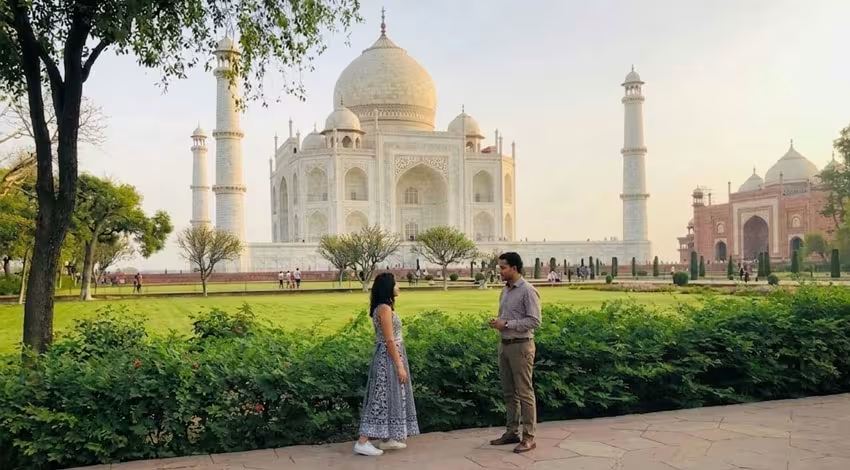
The Golden Triangle is India’s most popular travel circuit, connecting three iconic cities: Delhi, Agra, and Jaipur. Together, these three cities form a rough triangle on the map, which is where the name comes from.
This route covers some of the greatest monuments on earth. It includes the Taj Mahal, Red Fort, Qutub Minar, Humayun’s Tomb, Agra Fort, Fatehpur Sikri, Amber Fort, City Palace, Hawa Mahal, and Jantar Mantar.
According to India’s Ministry of Tourism, the Golden Triangle circuit attracts over 3 million international tourists every year, making it the most visited travel route in all of South Asia.
However, many travelers arrive unprepared. They do not know which monuments are closed on which days. They miss sunrise at the Taj Mahal. They pay higher fees at the gate instead of booking online. This guide fixes all of that.
Complete Golden Triangle Monument Ticket Prices 2026
| Monument | City | Indian Visitors | Foreign Visitors | Opening Hours | Closed On |
|---|---|---|---|---|---|
| Red Fort | Delhi | ₹35 | ₹550 | 9:30 AM – 4:30 PM | Monday |
| Qutub Minar | Delhi | ₹35 | ₹550 | 7:00 AM – 5:00 PM | Open Daily |
| Humayun’s Tomb | Delhi | ₹40 | ₹600 | 6:00 AM – 6:00 PM | Open Daily |
| Jama Masjid | Delhi | Free | Free | 7:00 AM – 12:00 PM & 1:30 PM – 6:30 PM | Friday (Midday Prayer) |
| India Gate | Delhi | Free | Free | Open 24 Hours | Open Daily |
| Taj Mahal | Agra | ₹50 | ₹1,100 | Sunrise – Sunset | Friday |
| Agra Fort | Agra | ₹50 | ₹650 | 6:00 AM – 6:00 PM | Open Daily |
| Fatehpur Sikri | Agra | ₹50 | ₹610 | Sunrise – Sunset | Open Daily |
| Amber Fort | Jaipur | ₹50 | ₹500 | 8:00 AM – 5:30 PM | Open Daily |
| Hawa Mahal | Jaipur | ₹50 | ₹200 | 9:00 AM – 5:00 PM | Open Daily |
| City Palace | Jaipur | From ₹400 | From ₹400 | 9:30 AM – 5:00 PM | Open Daily |
| Jantar Mantar | Jaipur | ₹50 | ₹200 | 9:00 AM – 7:00 PM | Open Daily |
Note: Entry fees and opening hours are subject to change. Please check the official monument or Archaeological Survey of India (ASI) website before your visit.
Delhi Monument Ticket Prices and Timings 2026
Delhi is the starting point of nearly every Golden Triangle tour. As India’s capital city, it carries centuries of Mughal, medieval, and colonial history. Here is what to know before visiting each monument.
Red Fort (Lal Qila) Ticket Price and Timings
Red Fort is the most iconic landmark in Delhi. Emperor Shah Jahan built this red sandstone fortress between 1638 and 1648. It served as the Mughal imperial residence for nearly 200 years. Every year on Independence Day, the Prime Minister of India addresses the nation from its famous Lahori Gate ramparts.
Red Fort Ticket Price 2026:
| Visitor Category | Entry Fee |
|---|---|
| Indian Citizens | ₹35 |
| Foreign Tourists | ₹550 |
| SAARC / BIMSTEC Citizens | ₹35 |
| Children (Below 15 Years) | Free |
| Light and Sound Show (Hindi) | ₹80 |
| Light and Sound Show (English) | ₹100 |
| Video Camera | ₹25 (Additional) |
Opening Hours: 9:30 AM to 4:30 PM
Day Closed: Every Monday
Nearest Metro: Chandni Chowk (Yellow Line) or Red Fort (Violet Line)
Expert Tip: Visit on a Tuesday or Wednesday morning when visitor numbers are at their lowest. The evening Light and Sound Show runs Tuesday through Sunday and gives you a dramatic audio-visual retelling of Mughal history. It is genuinely impressive and worth the extra ticket cost.
Common Mistake: Many visitors show up on a Monday and find the gates locked. Always double-check the closure day before heading to Red Fort.
Qutub Minar Ticket Price and Timings
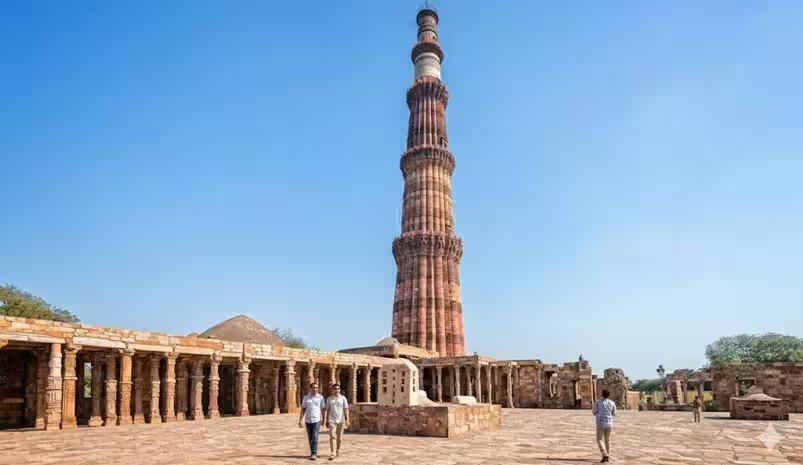
At 72.5 metres tall, Qutub Minar is the world’s tallest brick minaret and a UNESCO World Heritage Site. Construction began in 1193 under Qutb ud-Din Aibak and was completed by his successor Iltutmish. The wider Qutub Complex around it contains a mosque, medieval tombs, and the legendary Iron Pillar, which has stood rust-free for over 1,600 years.
Plan Your Dream India Tour
Our local travel experts will help you plan the perfect Golden Triangle tour with a private driver, handpicked hotels, flexible sightseeing, and transparent pricing.
✅ Private Tours 100% customized itineraries | 🚗 Premium AC Cars Clean & sanitized vehicles | 👨✈️ Verified Drivers English-speaking professionals |
💰 Best Price No hidden charges | ⭐ 5000+ Happy Travelers Trusted by travelers worldwide | 📞 24/7 Support We’re here throughout your journey |
Qutub Minar Ticket Price 2026:
| Visitor Category | Entry Fee |
|---|---|
| Indian Citizens | ₹35 |
| Foreign Tourists | ₹550 |
| SAARC / BIMSTEC Citizens | ₹35 |
| Children (Below 15 Years) | Free |
| Video Camera | ₹25 (Additional) |
Opening Hours: 7:00 AM to 5:00 PM (Last entry: 4:30 PM)
Day Closed: Open all 7 days
Nearest Metro: Qutub Minar (Yellow Line)
Expert Tip: Arrive at 7 AM when the gates first open. The morning light on the red sandstone is extraordinary for photography. By 10 AM, school groups and tour buses start arriving in large numbers. The Iron Pillar nearby is worth examining closely. Scientists have studied it for decades and still debate the exact metallurgical secret behind its rust resistance.
Humayun’s Tomb Ticket Price and Timings
Humayun’s Tomb is one of Delhi’s most beautiful and underappreciated monuments. Built in 1570 by Empress Bega Begum in memory of her husband Emperor Humayun, this Persian-style garden tomb was the first of its kind on the Indian subcontinent. Many architectural historians call it the direct predecessor to the Taj Mahal, and once you visit both, you will immediately see why.
Humayun’s Tomb Ticket Price 2026:
| Visitor Category | Entry Fee |
|---|---|
| Indian Citizens | ₹35–40 |
| Foreign Tourists | ₹550–600 |
| Children (Below 15 Years) | Free |
| Video Camera | ₹25 (Additional) |
Opening Hours: 6:00 AM to 6:00 PM
Day Closed: Open all 7 days
Nearest Metro: Jangpura (Violet Line)
Expert Tip: This is genuinely one of the most peaceful monuments in Delhi. It sees far fewer tourists than Red Fort or Qutub Minar. If you want a quiet, atmospheric morning visit with excellent light and virtually no crowds, prioritize Humayun’s Tomb. The Charbagh gardens surrounding the tomb are immaculately maintained and perfect for slow photography walks.
Jama Masjid Ticket Price and Timings
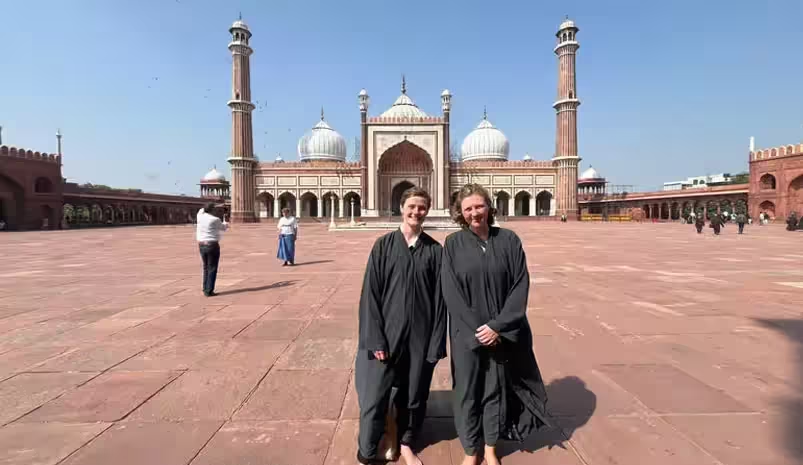
Jama Masjid is India’s largest mosque and one of Shah Jahan’s greatest architectural achievements. Built in 1656, its vast main courtyard can accommodate up to 25,000 worshippers at a time. Unlike purely touristic monuments, Jama Masjid remains an active and vibrant place of worship, which gives it an energy and authenticity that is genuinely moving.
Jama Masjid Entry Fee 2026:
| Visitor Category | Entry Fee |
|---|---|
| All Visitors (Entry) | Free |
| Photography (Camera) | ₹300 |
| Minaret Climb | ₹100 per person |
Opening Hours: 7:00 AM to 12:00 PM and 1:30 PM to 6:30 PM
Day Closed: Closes to tourists during Friday midday prayers
Nearest Metro: Chawri Bazar (Yellow Line)
Expert Tip: Climb one of the minarets for an incredible panoramic view over Old Delhi’s rooftop landscape and winding lanes. It is one of the cheapest and most rewarding views in the entire city. Dress modestly before entering. Both men and women should cover their heads and shoulders out of respect.
India Gate Entry Fee and Timings
India Gate is a 42-metre war memorial built in 1931, dedicated to the 84,000 Indian soldiers who lost their lives during World War I and the Third Anglo-Afghan War. The eternal flame beneath the arch, the Amar Jawan Jyoti, burns as a permanent symbol of national sacrifice and remembrance.
India Gate Entry Fee 2026:
| Visitor Category | Entry Fee |
|---|---|
| All Visitors | Free |
Opening Hours: Open 24 hours (best visited in the evening when illuminated)
Expert Tip: Visit India Gate in the evening when it is beautifully lit. The surrounding Kartavya Path offers a wonderful evening walk. Food stalls, ice cream vendors, and families picnicking along the lawns make this one of the most lively and free experiences in Delhi.
Agra Monument Ticket Prices and Timings 2026
Agra is the emotional heart of the Golden Triangle. Within a 40-kilometre radius, it contains three UNESCO World Heritage Sites. Give Agra at least one full day. Two days is ideal.
Taj Mahal Ticket Price and Timings
There are very few places in the world that genuinely exceed expectations. The Taj Mahal is one of them.

Emperor Shah Jahan commissioned this white marble mausoleum in 1631 as a tribute to his wife Mumtaz Mahal, who died during childbirth. Construction took 22 years and involved more than 20,000 artisans from across Asia and Persia. The result is widely considered the most perfect building ever constructed. Today it attracts approximately 7 to 8 million visitors each year.
Taj Mahal Ticket Price 2026:
| Visitor Category | Entry Fee |
|---|---|
| Indian Citizens / OCI Cardholders | ₹50 |
| Foreign Tourists | ₹1,100 |
| SAARC / BIMSTEC Citizens | ₹540 |
| Children (Below 15 Years) | Free |
| Main Mausoleum Entry (Optional) | ₹200 Additional |
| Night Viewing (Full Moon Nights) | Separate Ticket Required |
Online Booking Discount: Rs 5 off per Indian ticket / Rs 50 off per foreign ticket when booked online.
Opening Hours: Sunrise (approx. 6:00 AM) to Sunset (approx. 6:30 PM)
Day Closed: Fridays (closed entirely for mosque prayers. Partially reopens Friday afternoon for general public)
Night Viewing: Available on 5 nights per month. Full moon night plus 2 days before and 2 days after. Closed on Fridays and during Ramadan. Night viewing runs 8:30 PM to 12:30 AM in batches of 50 people, 30 minutes per batch.
Expert Tip: Arrive at the gate 30 minutes before sunrise, around 5:30 AM. The marble shifts from pale grey to soft golden pink as the sun rises over the minarets. For roughly 30 minutes after sunrise, the monument feels almost magical. Book your tickets online the night before to avoid the long morning queues at the ticket counter.
Common Mistake to Avoid: A large number of visitors skip the Rs 200 mausoleum entry fee to save money. This is a mistake. The interior of the main mausoleum contains the actual cenotaphs of Shah Jahan and Mumtaz Mahal, surrounded by intricately carved marble screens and inlaid precious and semi-precious stones. It is the most breathtaking part of the entire monument. Do not miss it.
Agra Fort Ticket Price and Timings
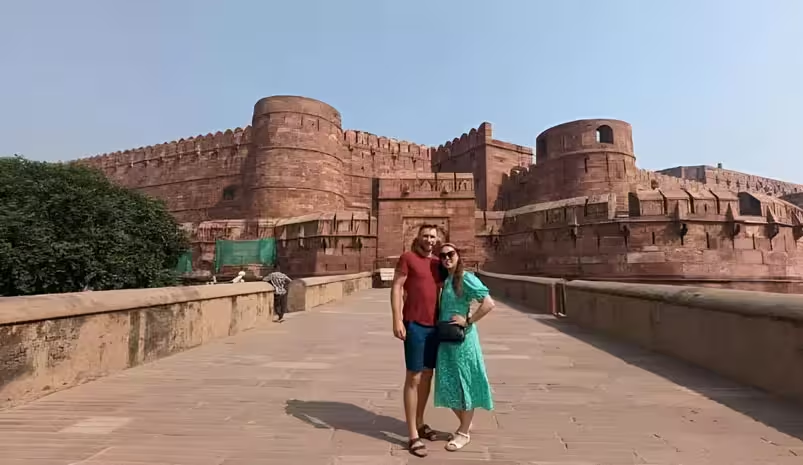
Agra Fort is the second UNESCO World Heritage Site in Agra and it is far more than just a sightseeing stop after the Taj Mahal. This massive red sandstone and white marble fortress was the primary residence of Mughal emperors Akbar, Jahangir, Shah Jahan, and Aurangzeb across nearly 150 years of Mughal rule.
What makes Agra Fort particularly special is its direct personal connection to the Taj Mahal story. Emperor Shah Jahan, after being imprisoned by his own son Aurangzeb, spent his final years confined to Musamman Burj tower inside this very fort. From that tower, he could see the Taj Mahal in the distance. Historians say he spent those last years simply gazing at the monument he built for his wife.
Agra Fort Ticket Price 2026:
| Visitor Category | Entry Fee |
|---|---|
| Indian Citizens | ₹50 |
| Foreign Tourists | ₹650 |
| SAARC / BIMSTEC Citizens | ₹50 |
| Children (Below 15 Years) | Free |
| Video Camera | ₹25 Additional |
| Audio Guide | ₹150 (English / Hindi) |
Opening Hours: 6:00 AM to 6:00 PM (Last entry: 5:30 PM)
Day Closed: Open all 7 days
Nearest Landmark: 2.5 km from Taj Mahal
Expert Tip: Plan your Agra Fort visit in the late afternoon, after your Taj Mahal morning visit. Head to Musamman Burj before 5:30 PM and look west toward the Taj Mahal. The sunset light on the white marble dome from this distance is genuinely stunning. It is one of those travel moments you will remember long after the trip ends.
Common Mistake: Most tourists rush through Agra Fort in 45 minutes. Give it at least 2 hours. The Diwan-i-Khas (Hall of Private Audience), Jahangiri Mahal, and Khas Mahal all tell different chapters of Mughal history and architecture. Hire an ASI-licensed guide at the gate to bring these spaces to life.
Fatehpur Sikri Ticket Price and Timings
About 37 kilometres from Agra, Fatehpur Sikri is one of the most hauntingly beautiful and historically fascinating places in the entire Golden Triangle. Emperor Akbar built this city as his new imperial capital in 1571. He populated it with courtiers, scholars, poets, musicians, and diplomats from across the known world, making it one of the most cosmopolitan cities of the 16th century.
Then, just 14 years after its completion, Akbar abandoned it entirely. The most widely accepted reason is that the water supply proved insufficient to support the growing population. The city has stood largely untouched ever since, earning its UNESCO World Heritage status in 1986.
Walking through Fatehpur Sikri feels genuinely different from other monuments. There are no crowds jostling for selfie positions. There is a quiet, contemplative atmosphere that makes it feel like a place frozen in time.
Fatehpur Sikri Ticket Price 2026:
| Visitor Category | Entry Fee |
|---|---|
| Indian Citizens | ₹50 |
| Foreign Tourists | ₹610 |
| SAARC / BIMSTEC Citizens | ₹50 |
| Children (Below 15 Years) | Free |
| Jama Masjid (Active Mosque Inside) | Free Entry |
Opening Hours: Sunrise to Sunset (approx. 6:00 AM to 6:00 PM)
Day Closed: Open all 7 days
Expert Tip: Combine Fatehpur Sikri with your Agra itinerary as an afternoon extension. Visit the Taj Mahal at sunrise, spend late morning at Agra Fort, have lunch in Agra, then drive to Fatehpur Sikri in the early afternoon. You will cover all three UNESCO World Heritage Sites in a single, well-paced day. Hire a licensed guide at the entrance. Akbar’s Diwan-i-Khas, with its central pillar and radiating walkways, is architectural genius that makes no sense until someone explains the purpose behind it.
Jaipur Monument Ticket Prices and Timings 2026
Jaipur is the final city in the Golden Triangle circuit and it is an extraordinary place to end your journey. The Pink City is loud, colorful, and bursting with energy. Its monuments are dramatic. Its bazaars are world-famous. And its food, especially the dal baati churma and laal maas, is some of the best in Rajasthan.
Amber Fort (Amer Fort) Ticket Price and Timings
Amber Fort is, without question, the most visually dramatic monument in Jaipur. It sits on a rocky hill overlooking Maota Lake, just 11 kilometres from the city center. Raja Man Singh I began its construction in 1592, and successive Maharajas expanded and refined it over the next 150 years.
The Sheesh Mahal inside Amber Fort is one of the most remarkable rooms you will ever stand in. Its ceiling and walls are completely covered in tiny convex mirror pieces. A single candle flame, when lit inside, reflects off thousands of mirrors simultaneously to illuminate the entire room. No photography can do it justice. You have to see it in person.
Amber Fort Ticket Price 2026:
| Visitor Category | Entry Fee |
|---|---|
| Indian Citizens | ₹50 |
| Indian Students | ₹10 |
| Foreign Tourists | ₹500 |
| Foreign Students | ₹100 |
| Children (Below 15 Years) | Free |
| Light and Sound Show | Separate Ticket Available at the Gate |
Opening Hours: 8:00 AM to 5:30 PM (Day Visit)
Evening Light and Sound Show: 6:30 PM to 9:15 PM
Day Closed: Open all 7 days
Expert Tip: Arrive at 8 AM when the gates open. By 10 AM, tour groups pour in and the narrow corridors inside become very congested. Walk up the main pathway to the fort entrance rather than taking other transport options. The walk gives you increasingly spectacular views over Maota Lake and the surrounding Aravalli hills. The evening Light and Sound Show at Amber Fort is considered one of the finest in all of Rajasthan and is highly recommended if you are spending the night in Jaipur.
Hawa Mahal Ticket Price and Timings
Hawa Mahal is Jaipur’s most photographed landmark and one of the most distinctive facades in all of Indian architecture. Built in 1799 by Maharaja Sawai Pratap Singh, this five-storey honeycomb structure contains 953 small latticed windows called jharokhas. It was designed specifically so that royal women could observe the busy streets and festivals of Jaipur below without being seen themselves.
The name translates literally to Palace of Winds. The design creates a natural cooling effect through the latticed windows, which was an extraordinarily clever architectural solution for Rajasthan’s extreme summer heat before air conditioning existed.
Hawa Mahal Ticket Price 2026:
| Visitor Category | Entry Fee |
|---|---|
| Indian Citizens | ₹50 |
| Foreign Tourists | ₹200 |
| Students | Discounted (Valid ID Card Required) |
Opening Hours: 9:00 AM to 5:00 PM
Day Closed: Open all 7 days
Expert Tip: The most famous photograph of Hawa Mahal is taken from the small rooftop cafe directly across the street, not from inside the monument. Have breakfast or chai there first and take your exterior photographs in the morning when the sun lights up the pink facade directly. Then go inside and climb to the upper floors for a surprisingly good view over Jaipur’s old city bazaars below.
City Palace Jaipur Ticket Price and Timings
City Palace is the former royal residence of the Maharajas of Jaipur and it remains a partially active royal household to this day. The current Maharaja of Jaipur still lives in a section of the palace. The public museum section is vast, beautifully curated, and houses an extraordinary collection of royal artifacts including weapons, textiles, royal costumes, astronomical instruments, and paintings.
The highlight for most visitors is the pair of enormous silver urns displayed in the Diwan-i-Khas. These are the Gangajali urns, measuring 1.6 metres tall each and weighing 340 kilograms each. They hold the Guinness World Record as the largest pure silver objects in the world. Maharaja Madho Singh II had them made to carry holy Ganga water when he traveled to England in 1901 for King Edward VII’s coronation.
City Palace Jaipur Ticket Price 2026:
| Visitor Category | Entry Fee |
|---|---|
| City Palace Museum (Adult) | ₹400 |
| Youth / Student / Child (Below 12 Years) | ₹200 |
| Senior Citizen / Defence Personnel | ₹200 |
| Composite Ticket (Includes Jaigarh Fort & Royal Cenotaphs) – Adult | ₹500 |
| Composite Ticket – Youth | ₹300 |
| Museum at Night (Includes Light & Sound Show) | ₹510 (Adult) |
Opening Hours: 9:30 AM to 5:00 PM
Day Closed: Open all 7 days
Expert Tip: The Composite Ticket at Rs 500 offers excellent value. It adds Jaigarh Fort, which houses the Jaivana cannon, the largest wheeled cannon ever built in the world, and the Royal Cenotaphs at Gaitor, which is a tranquil royal cremation garden with beautifully carved marble chhatris. If you only have one day in Jaipur, the Composite Ticket covers your best options.
Jantar Mantar Jaipur Ticket Price and Timings
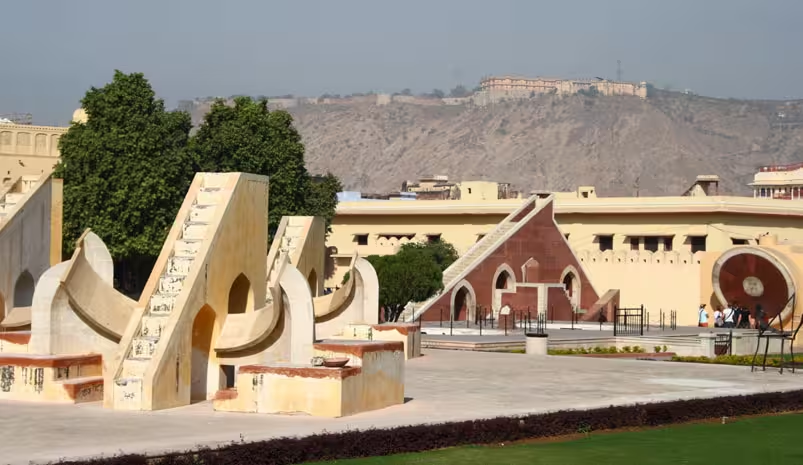
Most visitors walk past Jantar Mantar without giving it a second look. That is a genuine mistake.
Built in 1724 by Maharaja Sawai Jai Singh II, Jantar Mantar is a collection of 19 large-scale astronomical instruments made entirely of stone, brick, and marble. These instruments measured time, tracked the sun, predicted eclipses, and calculated the positions of stars and planets with remarkable accuracy. It is a UNESCO World Heritage Site and still the most sophisticated pre-telescope observatory ever built in the world.
The Samrat Yantra sundial here is the largest sundial on earth. It can measure time to within 2 seconds of accuracy.
Jantar Mantar Jaipur Ticket Price 2026:
| Visitor Category | Entry Fee |
|---|---|
| Indian Citizens | ₹50 |
| Indian Students | ₹20 |
| Foreign Tourists | ₹200 |
| Foreign Students | ₹100 |
Opening Hours: 9:00 AM to 7:00 PM (Last ticket issued at 6:30 PM)
Day Closed: Open all 7 days
Expert Tip: Hire a guide specifically for Jantar Mantar. Without explanation, the stone instruments look like abstract sculptures. With a knowledgeable guide, you understand that each structure solved a specific astronomical problem that was centuries ahead of its time. This is one of the most intellectually rewarding 45-minute experiences available anywhere on the Golden Triangle route.
Common Mistakes Tourists Make at Golden Triangle Monuments
Even experienced travelers get caught out by these avoidable errors. Here are the most common ones to watch out for:
Visiting the Taj Mahal on a Friday. It is the most common and most frustrating mistake on the entire Golden Triangle route. The Taj Mahal is closed every Friday. Always check the day before planning your Agra visit.
Arriving at Red Fort on a Monday. Red Fort closes every Monday without exception. Many tourists do not know this until they are already standing at the gate.
Not booking tickets online. At peak season, the ticket queues at Taj Mahal can take 45 minutes to an hour. Online booking saves you time and money. The ASI ticketing portal and apps like Book My Show and District offer easy online booking.
Skipping the Taj Mahal mausoleum interior. The Rs 200 extra charge puts some visitors off. But the interior of the main mausoleum is the most beautiful part of the entire monument. Pay the extra amount. You will not regret it.
Underestimating travel time between cities. Delhi to Agra is approximately 200 kilometres and takes 3 to 4 hours by road. Agra to Jaipur is approximately 240 kilometres and takes around 4 to 5 hours. The Jaipur to Delhi stretch is about 280 kilometres and takes 4 to 5 hours. Factor these distances into your daily planning.
Visiting monuments between 11 AM and 3 PM in summer. The Golden Triangle sits in North India where summer temperatures regularly exceed 42 to 45 degrees Celsius from April through June. Open-air monuments become genuinely uncomfortable during midday. Plan all monument visits before 11 AM or after 4 PM in summer months.
Expert Tips for Planning Your Golden Triangle Monument Visits
Based on years of planning Golden Triangle tours, here are the recommendations that make the biggest difference:
Start every day early. The best light, the smallest crowds, and the coolest temperatures all happen between 6 AM and 10 AM. Set your alarm and use those early morning hours for monuments.
Visit the Taj Mahal first on your Agra day. Arrive at sunrise, spend 2 to 3 hours there, and then head to Agra Fort in the late morning or early afternoon. If you have time, drive to Fatehpur Sikri in the late afternoon. This sequence lets you cover all three Agra UNESCO World Heritage Sites in one well-organized day without feeling rushed.
Use the Jaipur Composite Ticket. The City Palace Composite Ticket at Rs 500 includes Jaigarh Fort and the Royal Cenotaphs at Gaitor. It saves money and simplifies entry across multiple sites.
Hire ASI-licensed guides, not unofficial touts. Every major monument has official Archaeological Survey of India licensed guides at the main entrance. They charge a fixed rate and their knowledge is excellent. Unofficial guides outside the gates are unreliable. Always look for the official guide badge.
Carry small denomination notes. Video camera fees, shoe cover charges, and locker charges are paid separately in cash at many monuments. Carry Rs 10, Rs 20, and Rs 50 notes to avoid change issues.
Visit Jama Masjid and India Gate on the same Delhi evening. Both have free entry and are best experienced in the afternoon and evening hours. Combining them saves a full half-day for other monuments.
Is There a Combined Ticket for Golden Triangle Monuments?
Yes. There are two important composite ticket options worth knowing.
Agra Composite Ticket: The ASI offers a two-day composite ticket covering the Taj Mahal, Agra Fort, Fatehpur Sikri, Itmad-ud-Daula’s Tomb, and Sikandra at a bundled rate. For foreign tourists, this works out significantly cheaper than buying individual tickets separately. Ask at the Taj Mahal ticket counter or book through the ASI online portal.
Jaipur Composite Ticket: The City Palace Composite Ticket at Rs 500 per adult covers City Palace Museum, Jaigarh Fort, and Royal Cenotaphs at Gaitor. Rajasthan Tourism also offers a separate all-monuments pass covering Amber Fort, Hawa Mahal, Jantar Mantar, Nahargarh Fort, and Albert Hall Museum under a single ticket.
Best Time to Visit Golden Triangle Monuments
October to March is the best time to visit the entire Golden Triangle. Temperatures stay pleasant between 10 to 25 degrees Celsius. Mornings can be cool and slightly misty, which makes the Taj Mahal look particularly atmospheric.
April to June brings intense heat. Temperatures regularly hit 42 to 45 degrees Celsius. Plan all outdoor monument visits before 10 AM and after 5 PM without exception.
July to September is monsoon season. Heat breaks significantly, crowds drop, and the countryside turns lush green. Some days bring heavy rain but the Taj Mahal against a dramatic monsoon sky is one of the most beautiful sights in India.
How Much Does It Cost to Visit All Delhi Agra Japur Monuments?
Here is a realistic total cost estimate for a foreign tourist visiting all major monuments:
Delhi Monuments:
- Red Fort: Rs 550
- Qutub Minar: Rs 550
- Humayun’s Tomb: Rs 550 to 600
- Jama Masjid: Free (Rs 300 if carrying a camera)
- India Gate: Free
- Delhi Total: Approximately Rs 1,650 to 2,000
Agra Monuments:
- Taj Mahal: Rs 1,100 (plus Rs 200 for mausoleum)
- Agra Fort: Rs 650
- Fatehpur Sikri: Rs 610
- Agra Total: Approximately Rs 2,560
Jaipur Monuments:
- Amber Fort: Rs 500
- Hawa Mahal: Rs 200
- City Palace Composite: Rs 500
- Jantar Mantar: Rs 200
- Jaipur Total: Approximately Rs 1,400
Total for Foreign Tourist: Approximately Rs 5,600 to Rs 6,000 (around USD 65 to 75)
Total for Indian Tourist: Approximately Rs 400 to Rs 500 for the complete circuit — outstanding value for access to multiple UNESCO World Heritage Sites.
Visit the Taj Mahal first on your Agra day.
Arrive at sunrise, spend 2 to 3 hours there, and then head to Agra Fort in the late morning or early afternoon. If you have time, drive to Fatehpur Sikri in the late afternoon. This sequence lets you cover all three Agra UNESCO World Heritage Sites in one well-organized day without feeling rushed.
Use the Jaipur Composite Ticket. The City Palace Composite Ticket at Rs 500 includes Jaigarh Fort and the Royal Cenotaphs at Gaitor. It saves money and simplifies entry across multiple sites.
Hire ASI-licensed guides, not unofficial touts. Every major monument has official Archaeological Survey of India licensed guides at the main entrance. They charge a fixed rate and their knowledge is excellent. Unofficial guides outside the gates are unreliable. Always look for the official guide badge.
Carry small denomination notes. Video camera fees, shoe cover charges, and locker charges are paid separately in cash at many monuments. Carry Rs 10, Rs 20, and Rs 50 notes to avoid change issues.
Visit Jama Masjid and India Gate on the same Delhi evening. Both have free entry and are best experienced in the afternoon and evening hours. Combining them saves a full half-day for other monuments.
Is There a Combined Ticket for Delhi, Agra, and Jaipur?
Yes. There are two important composite ticket options worth knowing.
Agra Composite Ticket: The ASI offers a two-day composite ticket covering the Taj Mahal, Agra Fort, Fatehpur Sikri, Itmad-ud-Daula’s Tomb, and Sikandra at a bundled rate. For foreign tourists, this works out significantly cheaper than buying individual tickets separately. Ask at the Taj Mahal ticket counter or book through the ASI online portal.
Jaipur Composite Ticket: The City Palace Composite Ticket at Rs 500 per adult covers City Palace Museum, Jaigarh Fort, and Royal Cenotaphs at Gaitor. Rajasthan Tourism also offers a separate all-monuments pass covering Amber Fort, Hawa Mahal, Jantar Mantar, Nahargarh Fort, and Albert Hall Museum under a single ticket.
Best Time to Visit Golden Triangle
October to March is the best time to visit the entire Golden Triangle. Temperatures stay pleasant between 10 to 25 degrees Celsius. Mornings can be cool and slightly misty, which makes the Taj Mahal look particularly atmospheric.
April to June brings intense heat. Temperatures regularly hit 42 to 45 degrees Celsius. Plan all outdoor monument visits before 10 AM and after 5 PM without exception.
July to September is monsoon season. Heat breaks significantly, crowds drop, and the countryside turns lush green. Some days bring heavy rain but the Taj Mahal against a dramatic monsoon sky is one of the most beautiful sights in India.
How Much Does It Cost to Visit All Golden Triangle Monuments?
Here is a realistic total cost estimate for a foreign tourist visiting all major monuments:
Delhi Monuments:
- Red Fort: Rs 550
- Qutub Minar: Rs 550
- Humayun’s Tomb: Rs 550 to 600
- Jama Masjid: Free (Rs 300 if carrying a camera)
- India Gate: Free
- Delhi Total: Approximately Rs 1,650 to 2,000
Agra Monuments:
- Taj Mahal: Rs 1,100 (plus Rs 200 for mausoleum)
- Agra Fort: Rs 650
- Fatehpur Sikri: Rs 610
- Agra Total: Approximately Rs 2,560
Jaipur Monuments:
- Amber Fort: Rs 500
- Hawa Mahal: Rs 200
- City Palace Composite: Rs 500
- Jantar Mantar: Rs 200
- Jaipur Total: Approximately Rs 1,400
Total for Foreign Tourist: Approximately Rs 5,600 to Rs 6,000 (around USD 65 to 75)
Total for Indian Tourist: Approximately Rs 400 to Rs 500 for the complete circuit — outstanding value for access to multiple UNESCO World Heritage Sites.