Choosing the right clothing for the Golden Triangle Trip is not just about comfort. It directly affects your access to monuments, your interactions with locals, and your overall experience across all three cities.
Here is the practical reality. If you arrive at Jama Masjid in shorts, you will be turned away or required to rent a wrap at the entrance. If you arrive at a Hindu temple in sleeveless clothing, you may be denied entry or made to feel unwelcome. If you walk through Old Delhi’s conservative neighborhoods in revealing clothing, you will attract unwanted attention that makes the experience less enjoyable.
On the other hand, when you dress appropriately, something genuinely positive happens. Locals react more warmly. Interactions feel more respectful on both sides. You blend into the environment more naturally. And you simply feel more comfortable moving through all the different spaces the Golden Triangle takes you through in a single day.
The dress code is not a burden. It is a practical key to a better experience.
The Golden Triangle Dress Code: Core Principles
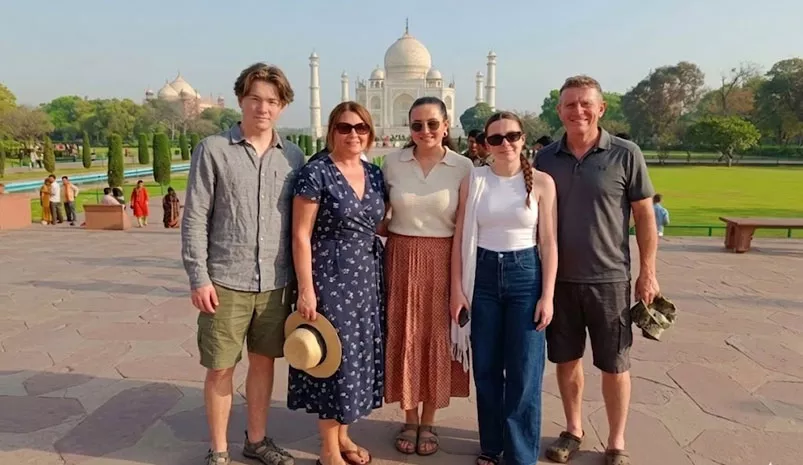
Before going monument by monument, here are the five core clothing principles that apply everywhere on the Golden Triangle circuit.
Cover your shoulders and knees. This is the universal baseline. It applies to men and women equally at religious sites. It is strongly recommended everywhere else for comfort and cultural respect.
Choose loose over fitted. Loose clothing is cooler in North India’s heat, more modest, and more comfortable for long days of walking. Fitted clothing in thin fabric becomes uncomfortable quickly in temperatures above 35 degrees Celsius.
Choose natural fabrics. Cotton and linen breathe. Synthetic fabrics trap heat and moisture. In Delhi, Agra and Jaipur, particularly from March through October, natural fabrics make a genuine difference to your daily comfort.
Always carry a scarf. A lightweight cotton or silk scarf serves as a head covering, an arm covering, a lap covering, sun protection and even an emergency layer on cool evenings. It is the single most versatile packing item for the Golden Triangle Tour.
Shoes that slip off easily. You remove your shoes at almost every temple, mosque and fort in India. Shoes with multiple buckles, laces that take time to retie, or boots that pull on and off slowly create unnecessary delays and frustration multiple times per day. Slip-on sandals or shoes are practical gold on this circuit.
What to Wear at Each Major Golden Triangle Monument
Dress Code for the Taj Mahal, Agra
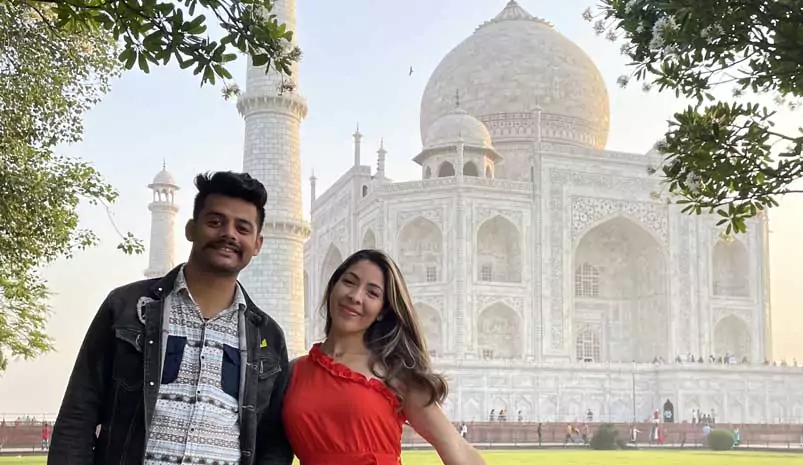
The Taj Mahal is the centerpiece of the Golden Triangle Tour and understanding its specific clothing requirements saves you stress on arrival.
The Taj Mahal complex itself does not have a strictly enforced tourist dress code for entry to the main gardens and exterior areas. You will see tourists in a wide variety of clothing styles at the Taj.
However, the rules change when you enter the main mausoleum building at the center of the complex.
At the Taj Mahal mausoleum:
Shoes must be removed before entering. This is mandatory and non-negotiable. Free shoe covers made of cloth are provided at the mausoleum entrance for visitors who prefer not to remove their shoes completely. Socks are recommended because the marble floor can be very hot in summer and quite cold in winter mornings.
Modest dress is strongly recommended throughout the entire Taj Mahal complex out of respect for the religious nature of the site. The Taj Mahal is a functioning mosque and mausoleum, not just a tourist attraction.
What to wear at the Taj Mahal:
Women should wear loose trousers or a long skirt with a top that covers the shoulders. A salwar kameez is ideal. Carry your scarf into the mausoleum to use as an additional layer if needed.
Men should wear full-length trousers rather than shorts. A light short-sleeve or long-sleeve shirt is appropriate.
Photography clothing tip: White and cream colored clothing photographs beautifully at the Taj Mahal. The white marble background means colorful clothing creates strong visual contrast in photos while light clothing blends elegantly with the monument. Many photographers specifically wear white for their Taj Mahal visit for this reason.
Expert Tip: Visit at sunrise when the marble is cool underfoot. The mausoleum floor feels refreshingly cold in the early morning, making the shoe removal actually pleasant rather than uncomfortable. By noon in summer, the marble surface becomes very warm.
Dress Code for Agra Fort
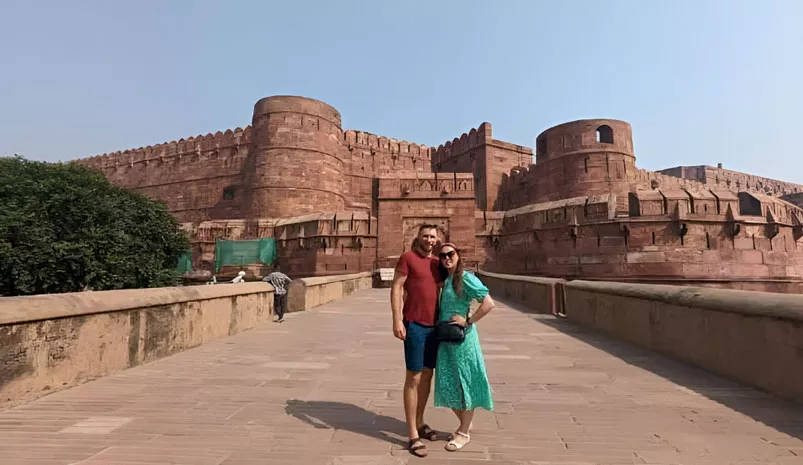
Agra Fort is a primarily historical and architectural monument with fewer strict religious dress requirements than the Taj Mahal or Jama Masjid.
However, it contains several mosques and prayer spaces within its walls, including the Moti Masjid and Nagina Masjid, where modest dress and shoe removal are expected.
What to wear at Agra Fort:
Comfortable, loose trousers and a light top are entirely appropriate. Shorts are technically permitted in the main fort areas but are not recommended. The fort involves significant walking across uneven stone surfaces and broad open courtyards that expose you to direct sun for extended periods. Loose cotton trousers with a light long-sleeve shirt provide sun protection while remaining appropriate throughout.
Carry your scarf for the mosque sections inside the fort. Wear shoes that slip off easily because you will remove them at the mosque entrances within the complex.
Dress Code for Fatehpur Sikri, Agra
Fatehpur Sikri contains several active religious spaces including the Dargah of Sufi saint Salim Chishti, which is one of the most visited shrines in North India.
The rules at Fatehpur Sikri are among the most specific on the entire Golden Triangle circuit.
At the Dargah of Salim Chishti:
Head coverings are mandatory for all visitors inside the shrine. Both men and women must cover their heads. Scarves or dupattas are the standard covering. If you do not have one, they are available for rent at the shrine entrance.
Shoes must be removed before entering the shrine. Designated shoe storage areas are available.
The Jama Masjid within Fatehpur Sikri also requires modest dress with covered shoulders and knees. As an active mosque, it expects the same respect as any functioning place of worship.
What to wear at Fatehpur Sikri:
Wear full-length loose trousers and a top with sleeves. Keep your scarf accessible at all times because you will use it multiple times as you move between the different sections of the complex. Comfortable slip-on shoes make the repeated shoe removal significantly easier.
Dress Code for Red Fort, Delhi
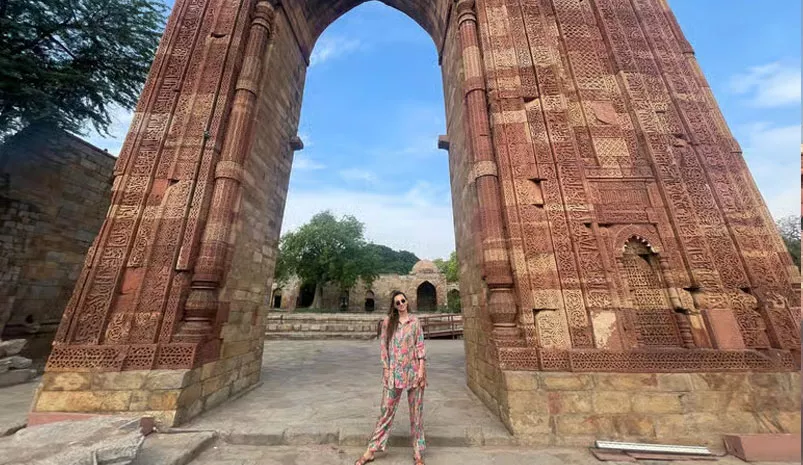
Red Fort is primarily an historical monument and a UNESCO World Heritage Site. As a former royal palace and military fortress rather than an active religious site, its dress requirements are more relaxed than Jama Masjid or Fatehpur Sikri.
That said, the Pearl Mosque (Moti Masjid) inside Red Fort is a place of worship where modest dress and shoe removal apply.
What to wear at Red Fort:
Comfortable, casual clothing works well at Red Fort. Loose trousers and a breathable top are ideal. The fort is largely open-air with significant walking distances across stone courtyards, so comfort and sun protection are the primary considerations.
Carry your scarf and wear slip-on shoes for the mosque sections. The fort grounds are dusty, particularly in dry season, so closed-toe shoes or sandals with good coverage are more comfortable than open sandals.
Expert Tip: Red Fort in summer requires serious sun protection. The open red sandstone courtyards reflect and retain heat intensely. Wear a light long-sleeve shirt rather than sleeveless, not just for cultural reasons but for genuine sun protection. A cotton scarf draped over your shoulders while walking outside works well.
Dress Code for Qutub Minar, Delhi
The Qutub Minar complex contains the Quwwat-ul-Islam Mosque, one of the earliest mosques in India. While the mosque is not an active place of daily prayer in the same way as Jama Masjid, it remains a sacred space and modest dress is appropriate throughout the complex.
What to wear at Qutub Minar:
Comfortable, modest casual clothing is entirely appropriate. Loose trousers and a short or long sleeve top work well. The complex is largely open-air and the archaeological site involves walking on uneven ground, so comfortable flat shoes are recommended.
The mosque sections require shoe removal. Slip-on shoes make this easier.
Dress Code for Jama Masjid, Delhi
Jama Masjid is the most dress-code-strict monument on the entire Golden Triangle Tour. It is also one of the most rewarding to visit, but you need to arrive properly prepared.
Jama Masjid is India’s largest active mosque. It is a functioning place of worship that welcomes tourists but operates under clear religious protocols. Ignoring the dress code at Jama Masjid shows disrespect to a place that is deeply significant to millions of people.
Mandatory dress requirements at Jama Masjid:
Head coverings are mandatory for everyone entering the mosque courtyard. Both men and women must cover their heads. Women should cover their hair with a scarf. Men can use a scarf, cap or any head covering.
Shoulders and arms must be covered. Sleeveless tops are not permitted. Tank tops, vest tops and strapless clothing are not acceptable.
Legs must be covered to the ankle. Shorts are not permitted. Long skirts, trousers or traditional Indian dress are all appropriate.
Shoes must be removed at the entrance and stored in designated areas.
If you arrive underdressed at Jama Masjid:
Do not worry. Wraps, scarves and coverings are available for rent at the entrance for a small fee of Rs 50 to Rs 100. The staff at the entrance will direct you to these if your clothing does not meet the requirements. This is a common situation and handled respectfully. However, having your own scarf is always more comfortable than a rental wrap.
What to wear at Jama Masjid:
Women should wear full-length loose trousers or a long skirt, a top with sleeves that covers the shoulders, and a dupatta or scarf to cover the head inside. A salwar kameez with dupatta is the most practical and culturally appropriate outfit for Jama Masjid.
Men should wear full-length trousers and a shirt with at least short sleeves. Bring a small scarf or cap for head covering.
Expert Tip: The best time to visit Jama Masjid as a tourist is in the morning between 9 AM and 11 AM on a non-Friday. The mosque is quieter during these hours, the light is beautiful for photography, and you have space to walk through the courtyard without navigating large prayer gatherings.
Dress Code for Humayun’s Tomb, Delhi
Humayun’s Tomb is a Mughal mausoleum and UNESCO World Heritage Site. As a place of burial and religious significance, modest dress is expected throughout the complex.
The site is more relaxed in its enforcement than Jama Masjid, but the cultural expectation of respectful dress remains. Shoes must be removed before entering the inner tomb chamber.
What to wear at Humayun’s Tomb:
Comfortable, modest casual clothing works well here. Loose trousers, a light top covering the shoulders, and your scarf accessible for the inner tomb area. The Charbagh gardens surrounding the tomb are extensive and beautifully maintained. Comfortable walking shoes are important for the garden exploration.
Dress Code for Amber Fort, Jaipur
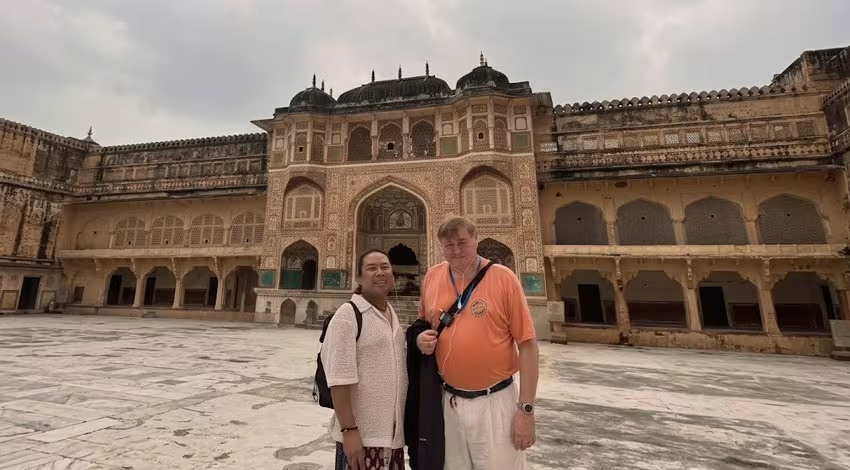
Amber Fort is primarily a royal Rajput fortress and palace complex. Its dress requirements are more relaxed than active religious sites, but it contains several Hindu temples and shrines within its walls where strict rules apply.
The Shila Devi Temple inside Amber Fort is an active Hindu temple and one of the most important religious sites within the entire fort complex. This temple has clear dress requirements.
At Shila Devi Temple inside Amber Fort:
Shoes must be removed before entering. This is mandatory and enforced at the temple entrance. There is a shoe storage area provided.
Modest dress is required. Shoulders should be covered. Legs should be covered to the knee at minimum.
What to wear at Amber Fort:
Comfortable, modest casual clothing that allows for active movement. The fort involves steep climbing on stone ramps and stairs to reach the upper sections. Loose cotton trousers or a midi skirt with a light top work well for women. Men should wear comfortable full-length trousers with a breathable shirt.
Footwear choice matters significantly at Amber Fort. The stone ramps can be slippery, particularly in the early morning when they are slightly damp. Shoes with grip on the sole are more practical than flat smooth-soled sandals. Avoid heels entirely.
Expert Tip: The Amber Fort exploration involves considerable walking in full sun. Wear light-colored clothing that reflects rather than absorbs heat. A light long-sleeve cotton shirt offers better sun protection than a short-sleeve top across the exposed open-air sections of the fort.
Dress Code for Hawa Mahal, Jaipur
Hawa Mahal is a royal palace built for observation rather than religious worship. It has no specific dress code requirements for tourists.
Comfortable, casual clothing is entirely appropriate. The interior of Hawa Mahal involves climbing narrow staircases across five floors. Comfortable footwear with good grip is important for this vertical exploration.
The exterior of Hawa Mahal is photographed from the street or from the rooftop cafe across the road. For street-level photography in Jaipur’s old city area, modest clothing is culturally appropriate as you are in a traditional, conservative neighborhood.
Dress Code for City Palace, Jaipur
City Palace is a living royal residence and museum complex. The dress requirements for the museum sections are relaxed and standard tourist casual clothing is acceptable.
However, if you visit during any special royal ceremonies or events, dress standards may be elevated. The palace staff will inform you of any specific requirements on the day.
The museum sections of City Palace are indoors and air-conditioned in many areas, which makes it a welcome relief on a hot Jaipur day. The courtyard areas are open-air.
What to wear at City Palace:
Smart casual clothing is ideal. Neat, clean clothing that covers shoulders and knees. Avoid beachwear, sports clothing or visibly dirty clothes inside the museum areas as a mark of respect for an active royal household.
Dress Code for Jantar Mantar, Jaipur
Jantar Mantar is an astronomical observatory and UNESCO World Heritage Site. It is not a religious site and has no specific dress code requirements.
Comfortable casual clothing is entirely appropriate. The site is fully open-air and involves walking across stone and marble surfaces. Sun protection is more important here than dress code compliance. Light, breathable clothing with a scarf for sun coverage works perfectly.
What to Pack: Complete Golden Triangle Clothing List
Based on everything above, here is your practical packing list for the Golden Triangle Tour. This list works for a 5 to 7 day trip across all three cities and all seasons except peak winter.
For Women
Bottoms:
- 2 to 3 pairs of loose cotton or linen trousers in neutral colors
- 1 long cotton skirt or maxi skirt (knee-length minimum)
- 1 pair of comfortable walking shorts for hotel use only (not for monuments)
Tops:
- 3 to 4 loose cotton tops or tunics with sleeves covering the shoulders
- 1 to 2 salwar kameez or kurti sets (these are the most versatile and culturally appropriate outfits on the entire circuit)
- 1 light cardigan or linen overshirt for cooler evenings or air-conditioned restaurants
Essential extras:
- 2 to 3 lightweight scarves or dupattas in different colors
- A comfortable, slip-on pair of walking sandals or shoes with grip
- 1 pair of comfortable flat walking shoes with socks for temple visits
- A small crossbody bag that sits in front of you
Accessories:
- Sunglasses with UV protection
- Wide-brimmed hat or sun cap for open-air monument visits
- Light cotton socks for temple visits
For Men
Bottoms:
- 3 pairs of lightweight cotton or linen full-length trousers
- 1 pair of cotton chino-style trousers for evenings and smarter settings
- Shorts are acceptable at your hotel but not recommended at monuments
Tops:
- 3 to 4 light cotton short-sleeve shirts
- 1 to 2 light linen long-sleeve shirts for mosque and temple visits and sun protection
- 1 light jacket or overshirt for cool evenings in winter months
Essential extras:
- A small lightweight scarf or folded cotton handkerchief for head covering at mosques
- Slip-on sandals or loafers for easy shoe removal at monuments
- Comfortable flat walking shoes with grip for fort climbing
- Light cotton socks for temple visits
Accessories:
- Sunglasses
- Sun cap or hat for open-air monument visits
Seasonal Packing Adjustments for the Golden Triangle
The basic dress principles remain the same year-round, but the specific fabrics and layers you pack should change significantly based on your travel season.
What to Wear: October to March (Peak Season)
This is the most popular travel window and the one with the most varied temperature range. Days are warm to pleasantly cool. January mornings in Delhi and Agra can drop to 5 to 8 degrees Celsius before the sun comes up.
Add to your packing list:
- A warm fleece or light jacket for January and early February mornings
- A light thermal base layer for early morning Taj Mahal sunrise visits in December and January
- Closed-toe shoes rather than sandals for cold winter mornings
- Layers that you can remove as the day warms up
The classic Golden Triangle situation in January is this: you arrive at the Taj Mahal gate at 5:30 AM in cold, misty conditions and by 10 AM you are walking in bright sunshine at 22 degrees Celsius. Pack for both ends of that temperature range.
What to Wear: April to June (Summer)
Summer on the Golden Triangle requires a different approach to clothing. The focus shifts entirely toward heat management, sun protection and moisture control.
Key summer clothing principles:
- Wear only natural fabrics. Cotton and linen are non-negotiable in temperatures above 38 degrees Celsius.
- Light colors reflect heat. White, cream, pale blue and light grey are significantly cooler than dark colors in direct sun.
- Long sleeves in thin cotton actually keep you cooler than short sleeves in direct sun by creating a barrier between your skin and the sun’s radiation.
- Avoid jeans entirely. Denim is uncomfortable, non-breathable and slow to dry in summer sweat conditions.
Add to your packing list for summer:
- An additional 1 to 2 lightweight cotton long-sleeve shirts for sun protection at outdoor monuments
- Cooling towels or a small portable spray bottle for Taj Mahal and Red Fort courtyard visits
- Moisture-wicking cotton socks
- A wide-brimmed hat rather than a cap for better sun coverage
What to Wear: July to September (Monsoon)
Monsoon brings significant humidity alongside the rain, which makes clothing choice particularly important for comfort.
Key monsoon clothing principles:
- Avoid white or very light colors that become see-through when wet in unexpected rain
- Pack quick-dry fabrics where possible
- Sandals that dry quickly are better than closed shoes that stay wet for hours
- A compact travel umbrella is more useful than a rain jacket for sudden short bursts of rain
Add to your packing list for monsoon:
- Quick-dry cotton or linen trousers
- Sandals with grip that handle wet stone surfaces safely
- A compact lightweight umbrella
- A small waterproof bag cover or dry bag for your camera and documents
Common Dress Mistakes on the Golden Triangle Tour
Wearing shorts to Jama Masjid. This is the single most common dress mistake on the entire Golden Triangle circuit. You will not be permitted to enter without covering your legs. Either pack a wrap or bring a long scarf specifically for this visit.
Forgetting socks. Multiple monuments require shoe removal and some marble surfaces, particularly inside the Taj Mahal mausoleum in summer, are extremely hot underfoot. Carry a pair of thin cotton socks in your bag every day.
Packing too many heavy fabrics. Many first-time Golden Triangle travelers overpack out of worry about modesty requirements. In practice, 3 to 4 well-chosen lightweight cotton outfits serve you better than 7 to 8 heavy items. The Golden Triangle circuit involves significant amounts of daily laundry opportunity at hotels.
Wearing new shoes for the first time. The Golden Triangle involves considerable walking across uneven stone surfaces, steep fort ramps and long monument pathways. New, unworn shoes on Day 1 of a Golden Triangle tour are a reliable way to develop painful blisters by Day 2. Break in your walking shoes at home before travel.
Packing heels or dress shoes. Smart evenings at Jaipur’s rooftop restaurants or Delhi’s better dining areas do not require heels. Comfortable flat sandals dress up easily for evening and protect you from the cobblestones and uneven surfaces that characterize both old city areas.
Wearing dark colors in summer. Black, navy and dark grey clothing in 42 degree Celsius direct sun on the open courtyards of the Taj Mahal or Agra Fort is genuinely uncomfortable. Save dark colors for evening wear and choose light colors for all daytime monument visits in summer months.
The One Item You Cannot Leave Home Without
If there is a single non-negotiable clothing item for the Golden Triangle Tour, it is a lightweight scarf.
A good travel scarf — cotton, silk, or cotton-silk blend — approximately 150 to 180 centimetres long — does all of the following:
Covers your head at Jama Masjid and Fatehpur Sikri. Covers your shoulders when you arrive somewhere and realize your top is not quite adequate. Provides shade over the back of your neck and shoulders at open-air monuments in summer. Serves as a light layer on cool evenings. Drapes as a decorative accessory for evening photographs. Works as a makeshift bag for small purchases in bazaars. Folds completely flat in your daypack and weighs almost nothing.
Buy one beautiful Jaipur block-print cotton scarf on Day 1 of your Jaipur visit and use it every single day for the rest of your trip. The bazaars around Hawa Mahal and Johari Bazaar sell them for Rs 200 to Rs 500 and they are genuinely one of the best travel investments you can make on this circuit.
FAQs: What to Wear on a Golden Triangle Tour
Q1. What should I wear on a Golden Triangle Tour in India?
Wear loose, comfortable, breathable clothing that covers your shoulders and knees across the entire Golden Triangle circuit. Light cotton or linen fabrics are ideal. Both men and women should carry a lightweight scarf every day. Modest dress is recommended in Delhi, Agra and Jaipur to respect local culture, gain entry to religious sites without issue and reduce unwanted attention in conservative areas.
Q2. Is there a dress code for the Taj Mahal?
The Taj Mahal does not have a strictly enforced entry dress code for the main gardens. However, modest clothing covering shoulders and knees is strongly recommended out of respect for the site’s religious significance. Shoes must be removed or covered with provided shoe covers before entering the inner mausoleum building. Socks are recommended because marble surfaces can be very hot in summer.
Q3. What is the dress code for Jama Masjid Delhi?
Jama Masjid requires all visitors to cover their heads, cover their shoulders and arms, and cover their legs to the ankle. Both men and women must comply. Shoes must be removed at the entrance. Rental wraps and coverings are available at the entrance for Rs 50 to Rs 100 if you arrive without appropriate clothing. Arriving with your own scarf is more comfortable than using a rental wrap.
Q4. Can I wear shorts on the Golden Triangle Tour?
Shorts are not recommended for the Golden Triangle Tour. You will be denied entry to religious sites including Jama Masjid, the Dargah at Fatehpur Sikri and various temple interiors while wearing shorts. Even at non-religious monuments, shorts are less culturally appropriate and provide no sun protection on exposed stone courtyards. Lightweight loose linen or cotton trousers are cooler, more practical and universally appropriate across all sites.
Q5. What shoes should I wear on the Golden Triangle Tour?
Wear comfortable, flat shoes or sandals that slip on and off easily. You remove your footwear at almost every temple, mosque and several fort shrines throughout the day. Shoes with multiple buckles, lace-up boots or tight-fitting shoes slow you down significantly at each monument. Shoes or sandals with grip on the sole are important for Amber Fort’s stone ramps. Carry thin cotton socks in your daypack for hot marble surfaces and cool temple floors.
Q6. What should women specifically wear on the Golden Triangle Tour?
Women should pack loose cotton or linen trousers, long skirts or maxi skirts, light tops with sleeves covering the shoulders, and salwar kameez sets which are the most universally appropriate outfit for every situation on the circuit. Carry 2 to 3 lightweight scarves or dupattas every day. Avoid tight clothing, sleeveless tops in conservative areas and short hemlines. Comfortable flat walking sandals or shoes with good grip are essential.
Q7. What should men wear on the Golden Triangle Tour?
Men should wear lightweight full-length cotton or linen trousers at all monument visits. Light cotton short-sleeve shirts work well for most sites. Carry a small scarf, folded handkerchief or lightweight cap for head covering at mosques. Avoid shorts at religious sites. Comfortable slip-on shoes or sandals with good grip are the most practical footwear choice across the circuit.