Every year, over 7 million people visit Agra. Almost all of them come for one reason: the Taj Mahal. And that is completely understandable. The Taj Mahal is genuinely one of the most extraordinary things you will ever see. No amount of prior exposure through photographs fully prepares you for the real thing.
But here is the truth that most visitors never discover: Agra contains some of the most significant Mughal monuments in the entire Indian subcontinent, and most of them sit virtually empty while the Taj Mahal absorbs every tourist in the city.
The monuments on this list are not minor footnotes. Each one is historically, architecturally and aesthetically remarkable. Some of them directly influenced the construction of the Taj Mahal itself. Others contain details and stories that add an entirely new layer of depth to the Mughal history you experience at the main sites.
If you have just one day in Agra, visiting the Taj Mahal is absolutely essential. However, if you can spare even two extra hours, an Agra Sightseeing Tour will take you beyond the city’s most famous landmark and reveal five hidden gems that offer a deeper understanding of Agra’s rich history, culture, and architectural heritage.
The 5 Hidden Places in Agra Most Tourists Miss
Mehtab Bagh: The Best View of the Taj Mahal You Have Never Seen
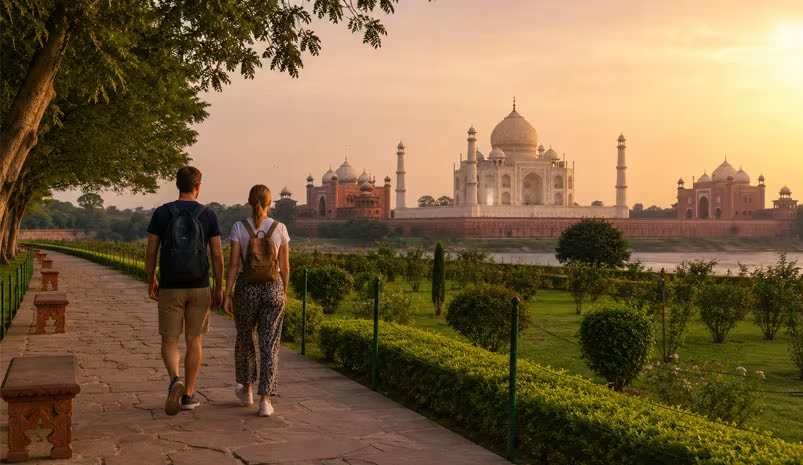
If you want to understand why Mehtab Bagh is Agra’s greatest secret, consider this: from the main Taj Mahal complex, you look across the Yamuna River toward a flat, unremarkable riverbank.
What you cannot see from there is that Mehtab Bagh sits on that very opposite bank, and from Mehtab Bagh, you have an unobstructed, straight-line view of the Taj Mahal reflected in the Yamuna River with nothing blocking your sightline.
The name translates to Moonlit Garden. Emperor Babur originally laid it out in the 16th century, and Shah Jahan later restored and expanded it as part of the Taj Mahal’s greater landscape plan. Archaeological evidence and historical records suggest Shah Jahan may have planned a mirror-image black marble Taj Mahal to be built at Mehtab Bagh facing the white one across the river, though the project was never completed.
Discover the Real Agra Beyond the Taj Mahal
Explore Agra’s hidden gems with a private guide, comfortable AC car, and a flexible itinerary. Visit the Taj Mahal, Agra Fort, Fatehpur Sikri, and lesser-known attractions at your own pace.
🕌 Hidden Attractions Discover Agra beyond the famous landmarks | 🚗 Private AC Car Comfortable transportation throughout your tour | 🎓 Licensed Guide Learn the history behind every monument |
📍 Flexible Itinerary Travel at your own pace with custom stops | 💰 Transparent Pricing No hidden costs or last-minute surprises | ⭐ Top-Rated Tours Trusted by travelers from around the world |
What You See at Mehtab Bagh
The garden itself is a classic Charbagh design — a formal Persian garden divided into four quadrants by water channels. It is immaculately maintained with rows of cypress trees, flowering plants and original geometric stone pathways.
But the view is the real reason to come.
In the late afternoon, roughly 90 minutes before sunset, the light on the Taj Mahal from this angle is extraordinary. The white marble dome turns progressively from bright white to pale gold to deep amber as the sun descends. The reflection in the Yamuna, when the water is clear, adds another dimension to the view entirely.
Most importantly, you experience this with perhaps a few dozen other visitors rather than thousands.
Entry Fee: Rs 300 for foreign tourists, Rs 25 for Indian citizens
Opening Hours: Sunrise to sunset, open all 7 days
Distance from Taj Mahal: Approximately 1.5 km by road
Expert Tip: Visit Mehtab Bagh between 4:30 PM and 6:00 PM in winter, or 5:00 PM to 7:00 PM in summer. The late afternoon light on the Taj Mahal from this angle is unlike anything you will see from inside the main complex. Bring a camera with a zoom lens if possible.
Chini Ka Rauza: India’s Only Persian-Tiled Tomb
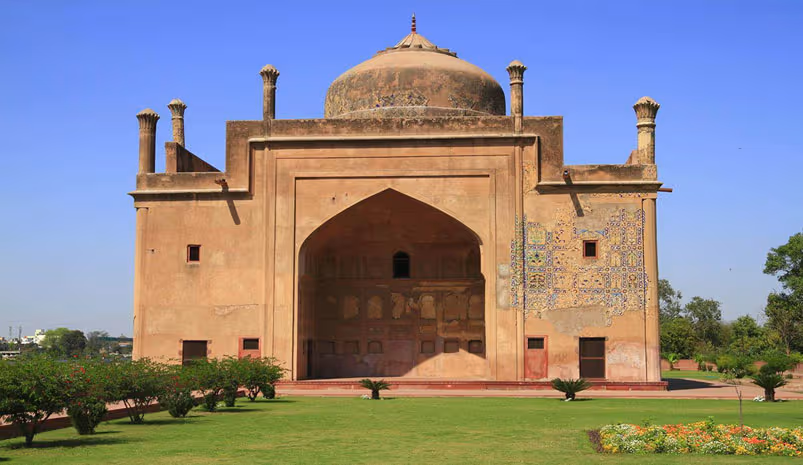
Chini Ka Rauza sits about 1 kilometre north of the Taj Mahal along the Yamuna River, and almost nobody stops there.
This is a genuine architectural treasure that deserves far more attention than it receives. Chini Ka Rauza is the tomb of Afzal Khan, a Persian poet and scholar who served as Prime Minister under Emperor Shah Jahan. It was built in the 1630s, and it is the only monument in India covered entirely in Persian enamelled tile work on its exterior.
The word “Chini” means Chinese or porcelain in Urdu, a reference to the blue and white glazed tiles that once covered every surface of the tomb’s exterior. The tiles were imported from Persia and Multan during construction, making this monument unique in the entire Indian subcontinent.
The Architecture and Its Story
The dome of Chini Ka Rauza is covered in intricate geometric and floral patterns rendered in cobalt blue, turquoise, yellow, green and white glazed tiles. Much of the tilework has deteriorated over the centuries due to neglect and the elements, but enough survives to give you a clear sense of how extraordinarily decorated this building once was.
Inside the tomb chamber, the plasterwork contains Quranic calligraphy and Persian poetry by the tomb’s occupant himself. The paintings on the interior vaulted ceiling, though faded, show traces of the original brilliant colors.
The site has a melancholy, timeworn quality that many visitors find moving. It feels genuinely ancient and unglamourised in a way that more heavily visited monuments sometimes do not.
Entry Fee: Free for all visitors
Opening Hours: 6:00 AM to 6:00 PM, open all 7 days
Distance from Taj Mahal: Approximately 1 km north along Yamuna riverbank road
Expert Tip: Combine Chini Ka Rauza with Mehtab Bagh in a single afternoon. Both are north of the Taj Mahal along the same riverside road and can be visited consecutively in 2 to 3 hours total. Your private driver can wait at each site while you explore.
Tomb of Itimad-ud-Daula: The Monument That Invented the Taj Mahal
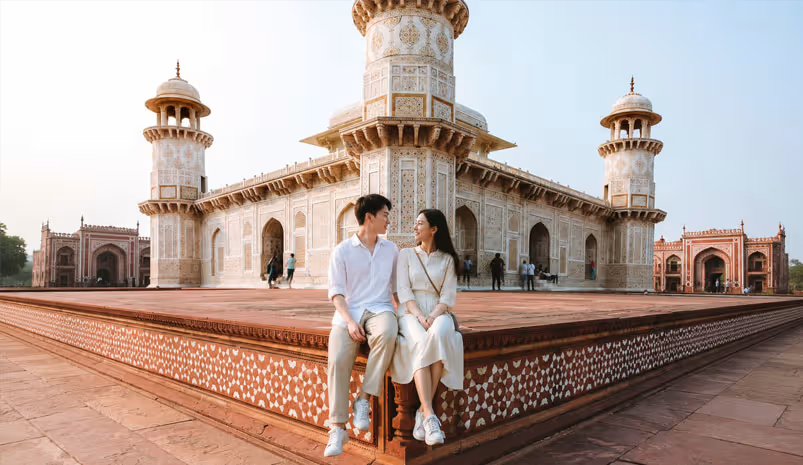
Here is something extraordinary that most Agra visitors never learn: the Taj Mahal was not the first Mughal monument to use white marble inlay work. That distinction belongs to the Tomb of Itimad-ud-Daula, built 14 years before the Taj Mahal, sitting quietly on the opposite bank of the Yamuna River.
Itimad-ud-Daula was the Prime Minister of Emperor Jahangir and the father of the famous Mughal empress Nur Jahan. When he died in 1622, Nur Jahan commissioned this tomb for him, making it the first Mughal monument built entirely of white marble and the first to use the pietra dura technique of inlaying precious and semi-precious stones into white marble surfaces.
Everything that makes the Taj Mahal visually extraordinary was first attempted here. The white marble. The carved geometric screens. The inlaid flower patterns. The jewel-like colored stones embedded in the marble surface. The Taj Mahal’s architects studied and refined what Nur Jahan had pioneered at her father’s tomb.
This is why art historians and architects call this monument the Baby Taj.
Why the Baby Taj Deserves Your Full Attention
The Tomb of Itimad-ud-Daula is significantly smaller than the Taj Mahal, but in terms of decorative detail, it is every bit as extraordinary.
The exterior marble screens (jali work) are so intricately carved that light filters through them in patterns that change throughout the day. The yellow marble used alongside the white creates a warm, honeyed visual quality quite different from the cool brilliance of the Taj Mahal.
Inside the main tomb chamber, the painted ceiling frescoes depicting wine vessels, cypress trees and fruit are remarkably preserved. This decorative painting style reflects the more personal, intimate character of a monument built by a daughter for her beloved father.
On busy days at the Taj Mahal, this monument typically has a few hundred visitors. On quiet days, you might have it almost to yourself.
Entry Fee: Rs 310 for foreign tourists (includes ASI fees), Rs 20 for Indian citizens
Opening Hours: Sunrise to sunset, open all 7 days
Distance from Taj Mahal: Approximately 3 km via river road, 15 minutes by auto-rickshaw
Expert Tip: Visit early morning between 7 AM and 9 AM. The morning light on the yellow and white marble creates a warm golden glow that is quite different from the midday appearance. The site also has beautiful riverside gardens that are peaceful and well-maintained.
Akbar’s Tomb, Sikandra: The Monument That Breaks Every Rule
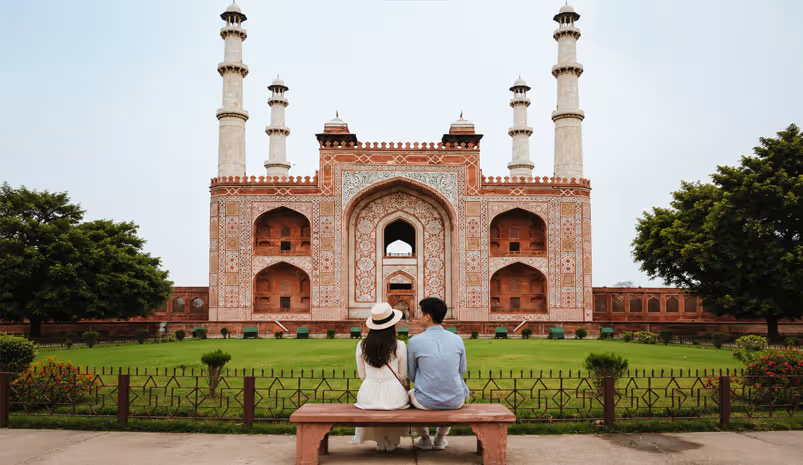
Most travelers drive past Sikandra on the way from Delhi to Agra without stopping. Those who do stop discover one of the most architecturally unique monuments in the Mughal empire.
Akbar’s Tomb at Sikandra was built between 1605 and 1613, completed by Akbar’s son Jahangir after Akbar died. What makes it genuinely unusual is that Emperor Akbar designed and began construction of his own mausoleum while he was still alive, and he deliberately chose to break every conventional Mughal architectural rule in doing so.
The result is a monument unlike anything else in India.
A Monument That Defies Classification
Where Mughal tombs typically have a single central dome, Akbar’s Tomb has no dome at all. It rises through five distinct terraced stories in decreasing size, with the topmost platform open to the sky and containing the actual cenotaph of Akbar visible from below.
The four gateway minarets are unique among Mughal architecture, built in white marble with extraordinarily delicate perforated screens at their uppermost levels. The main gateway is covered in geometric tile mosaics, mirrored glass, and calligraphic panels in a combination of styles that draws simultaneously from Hindu, Islamic and Persian architectural traditions.
Akbar was famous during his reign for attempting to synthesize all the religious and cultural traditions of India into a single unified vision. His tomb expresses exactly that philosophy in stone and marble.
The large formal garden surrounding the tomb is one of the finest surviving Mughal gardens in India. It is divided into quadrants in the classic Charbagh style and populated by peacocks, deer and black buck that roam freely through the grounds. The peacocks at Akbar’s Tomb have become genuinely famous among travelers who know about this site. They are wild, completely habituated to human visitors, and extraordinarily beautiful.
Inside the Tomb
The interior of the main tomb chamber is one of the most atmospheric spaces in all of Mughal India. The actual burial vault of Akbar is underground. The cenotaph in the upper open pavilion is visible from the garden below through marble lattice screens.
The interior walls retain traces of original painted decoration in deep blues, reds and golds. The tomb chamber itself is strikingly austere, with none of the jeweled marble decoration found at the Taj Mahal. This simplicity feels intentional and deeply powerful given that this is the resting place of the greatest Mughal emperor.
The site gets a fraction of the visitors that the Taj Mahal and Agra Fort receive, even though it is arguably equally significant historically. On a typical day, you will share this monument with perhaps a few hundred people rather than thousands.
Entry Fee: Rs 310 for foreign tourists, Rs 30 for Indian citizens
Opening Hours: Sunrise to sunset, open all 7 days
Distance from Agra: Approximately 10 km from Agra city center on NH19 toward Delhi
Time Required: 1 to 1.5 hours
Expert Tip: Visit Akbar’s Tomb on the drive from Delhi to Agra. It sits directly on National Highway 19 and makes a natural first stop before you enter Agra city. Your private driver can pull off the highway with no difficulty. Arriving early morning means you see the peacocks actively displaying before the midday heat sends them into shade.
Ram Bagh: India’s Oldest Surviving Mughal Garden
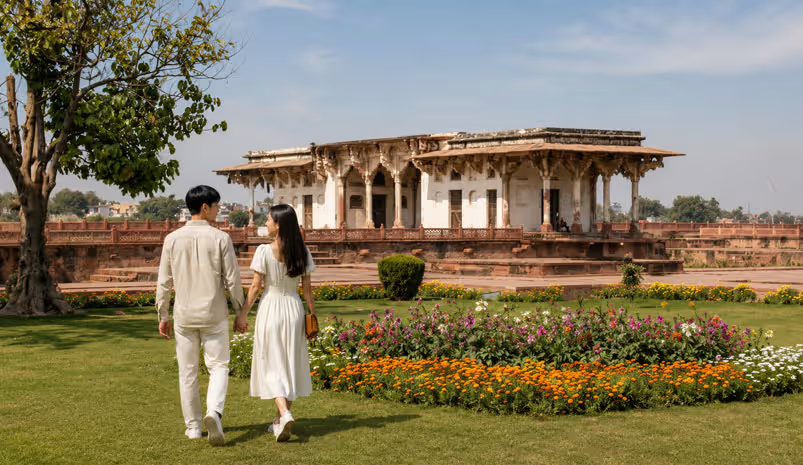
Ram Bagh sits approximately 2.5 kilometres north of the Taj Mahal along the Yamuna River, and it is almost certainly the least visited significant historical site in Agra.
This is extraordinary when you consider what it is. Ram Bagh is the oldest surviving Mughal garden in all of India. It was built by Emperor Babur himself, the founder of the Mughal dynasty, in approximately 1528, nearly a century before the Taj Mahal was commissioned.
Babur was the first Mughal emperor and one of the greatest garden designers in the history of Central Asian and Indian culture. He brought the Persian Charbagh garden concept to India and established it as the defining landscape style of the Mughal empire. Ram Bagh was one of his first gardens on Indian soil.
The garden originally served as a royal retreat along the Yamuna River. Babur himself rested here during his Indian campaigns. After his death, his body was kept temporarily at Ram Bagh before being transported to Kabul for burial.
What Survives Today
The formal garden structure largely survives intact, including the original water channels, raised terraces and geometric planting beds. Several pavilions and bathhouses from different periods of Mughal use still stand within the garden, though most are in varying states of preservation.
The riverside terrace is particularly evocative. A series of stone pavilions overlooks the Yamuna, and if you stand on the upper terrace in the late afternoon, you can see the Taj Mahal dome in the distance.
The garden is large, genuinely peaceful, and almost completely devoid of other tourists on most days. Visiting Ram Bagh feels less like a tourist attraction and more like a genuine encounter with a piece of history that has been left largely undisturbed.
There are no souvenir vendors outside the gate. There are no touts in the parking area. Just a garden that has stood for nearly 500 years, watched the Mughal empire rise and fall, and remains largely unknown to the millions of visitors who come to Agra every year.
Entry Fee: Rs 310 for foreign tourists, Rs 25 for Indian citizens
Opening Hours: Sunrise to sunset, open all 7 days
Distance from Taj Mahal: Approximately 2.5 km north along the Yamuna River Road
Expert Tip: Ram Bagh is at its best in the cooler months from October through February. The garden is lush, the light is soft, and the riverside walk is genuinely beautiful. Visit in the morning and combine it with Chini Ka Rauza and Mehtab Bagh for a complete northern Yamuna riverside circuit that takes half a day.
How to See All 5 Hidden Gems of Delhi in a Single Day
The good news is that all five of these hidden Agra monuments can be combined into a single well-organized day alongside your Taj Mahal and Agra Fort visits.
Here is a suggested itinerary:
Morning: 5:30 AM to 12:00 PM
Arrive at the Taj Mahal western gate at 5:30 AM for sunrise. Spend 2 to 3 hours there. Walk from Taj Mahal to Chini Ka Rauza (1 km north along the river road, 15 minutes on foot or 5 minutes by auto-rickshaw). Spend 30 to 45 minutes at Chini Ka Rauza.
Continue 1.5 km further north to Ram Bagh. Spend 45 minutes exploring the garden and riverside pavilions.
Late Morning to Afternoon: 12:00 PM to 3:00 PM
Drive to the Tomb of Itimad-ud-Daula on the opposite bank of the Yamuna (15 minutes by car from Ram Bagh). Spend 1 to 1.5 hours here. This is a good time for lunch at one of the riverside restaurants near the Baby Taj before continuing.
Afternoon: 3:00 PM to 6:30 PM
Visit Agra Fort (30 minutes by car from Baby Taj). Spend 1.5 to 2 hours exploring the fort. Then drive to Mehtab Bagh for the sunset view of the Taj Mahal. Arrive by 4:30 PM in winter or 5:00 PM in summer. Spend the final golden hours of daylight watching the Taj Mahal from the most extraordinary viewpoint in Agra.
On the Way Back to Delhi or Jaipur:
If you are returning to Delhi, stop at Akbar’s Tomb in Sikandra on the way out. It is on the Delhi highway and adds only 1 hour to your journey. If you are continuing to Jaipur, Sikandra is slightly off route but the detour is completely worth it.
Common Mistakes Visitors Make in Agra
Spending only half a day in Agra. Many Golden Triangle tour itineraries allocate just one morning to Agra, which means the Taj Mahal and nothing else. Give Agra at least a full day. Ideally two.
Missing the Taj Mahal at sunset or sunrise. The monument looks completely different at different times of day. If you can manage only one visit, make it sunrise. If you have a second morning or evening, the late afternoon light is equally remarkable.
Not visiting the Taj Mahal mausoleum interior. The Rs 200 additional entry for the main mausoleum building is paid by a surprising number of visitors. The interior is extraordinary. Pay it without hesitation.
Skipping Fatehpur Sikri on the Agra to Jaipur drive. Fatehpur Sikri sits 37 kilometres from Agra on the road to Jaipur and contains some of the most perfectly preserved Mughal architecture in India. It is a UNESCO World Heritage Site that most people drive past without stopping. Do not make this mistake.
Not hiring a licensed guide. A knowledgeable ASI-licensed guide transforms every one of these hidden places from a collection of interesting old buildings into a living, connected narrative about one of the greatest empires in human history. Hire one at the Taj Mahal gate and arrange to keep them for the full day if possible.
Why These Sites Matter Beyond Tourism
There is a deeper reason to visit these hidden places beyond simply seeing something different from the standard tourist circuit.
The Taj Mahal is extraordinary. But it is also a monument that has become, in some ways, a victim of its own fame. You experience it in the company of thousands of other people. You follow set pathways. You get approximately the same view as every other visitor.
These five hidden places give you something different. They give you Agra at a human scale. They give you history that feels genuinely alive rather than endlessly repeated for mass consumption.
Standing at Ram Bagh and understanding that Babur stood in this same garden nearly five centuries ago, at the very beginning of the Mughal story that eventually produced the Taj Mahal, creates a connection to history that no crowded main monument can replicate.
Walking through Chini Ka Rauza and touching glazed tiles that were shipped across continents to decorate the tomb of a poet gives you a completely different sense of how the Mughal world worked and how precious and sophisticated its culture was.
Watching the Taj Mahal reflect in the Yamuna from Mehtab Bagh as the sun goes down, with almost no one else around you, gives you a version of the world’s most famous monument that very few people ever experience.
These are not consolation prizes for travelers who could not get Taj Mahal tickets. These are experiences that complete your understanding of why Agra matters in the history of human civilization.
FAQs
Q1. What are the hidden places in Agra beyond the Taj Mahal?
The top hidden places in Agra that most tourists miss are Mehtab Bagh, Chini Ka Rauza, the Tomb of Itimad-ud-Daula (Baby Taj), Akbar’s Tomb at Sikandra, and Ram Bagh. Each offers extraordinary Mughal architecture and history with a fraction of the crowds found at the Taj Mahal and Agra Fort.
Q2. Is Mehtab Bagh worth visiting in Agra?
Yes, absolutely. Mehtab Bagh sits directly across the Yamuna River from the Taj Mahal and provides the most spectacular sunset view of the monument available anywhere. Entry costs only Rs 300 for foreign tourists. It is quiet, beautifully maintained, and offers a photography angle of the Taj Mahal that is entirely different from any view inside the main complex. It is one of the most undervisited yet rewarding sites in all of Agra.
Q3. What is the entry fee for Chini Ka Rauza?
Chini Ka Rauza has free entry for all visitors. It is one of the few significant Mughal monuments in Agra that charges no admission fee, making it exceptionally accessible. The site is open from approximately 6:00 AM to 6:00 PM every day of the week.
Q4. How far is Akbar’s Tomb from Agra city center?
Akbar’s Tomb at Sikandra is approximately 10 kilometres from Agra city center, located directly on National Highway 19 toward Delhi. By car or auto-rickshaw it takes 20 to 25 minutes from the Taj Mahal area. It is ideally visited as a first stop on the drive from Delhi to Agra, or as a final stop on the way out of Agra toward Delhi.
Q5. What is the Baby Taj in Agra?
The Baby Taj is the popular name for the Tomb of Itimad-ud-Daula, located on the opposite bank of the Yamuna River from the Taj Mahal. Built between 1622 and 1628 by Empress Nur Jahan for her father, it was the first Mughal monument built entirely of white marble and the first to use the pietra dura stone inlay technique later perfected at the Taj Mahal. Architects and historians consider it the direct prototype for the Taj Mahal.
Q6. Can I see all 5 hidden places in one day?
Yes. All five hidden places in Agra can be visited in a single well-organized day alongside the Taj Mahal and Agra Fort. Start at the Taj Mahal at sunrise. Follow the northern Yamuna riverside route to Chini Ka Rauza and Ram Bagh. Cross the river to the Baby Taj for lunch. Visit Agra Fort in the early afternoon. Finish at Mehtab Bagh for the sunset Taj Mahal view. Add Akbar’s Tomb at Sikandra on the drive out of Agra.
Q7. Is Ram Bagh open to tourists?
Yes. Ram Bagh is open to tourists from sunrise to sunset every day. Entry is Rs 310 for foreign tourists and Rs 25 for Indian citizens. The site is managed by the Archaeological Survey of India and is in a state of gradual restoration. Despite being the oldest surviving Mughal garden in India, it receives very few visitors and is one of the most peaceful and atmospheric sites in Agra.
Q8. Which hidden place in Agra is best for photography?
Mehtab Bagh is the best hidden place in Agra for photography because it provides a straight-on sunset view of the Taj Mahal across the Yamuna River that is not available from inside the main Taj complex. The Tomb of Itimad-ud-Daula is the second best option for photography due to its intricate white marble lattice screens and warm yellow marble panels that create extraordinary light effects in morning and afternoon light.